
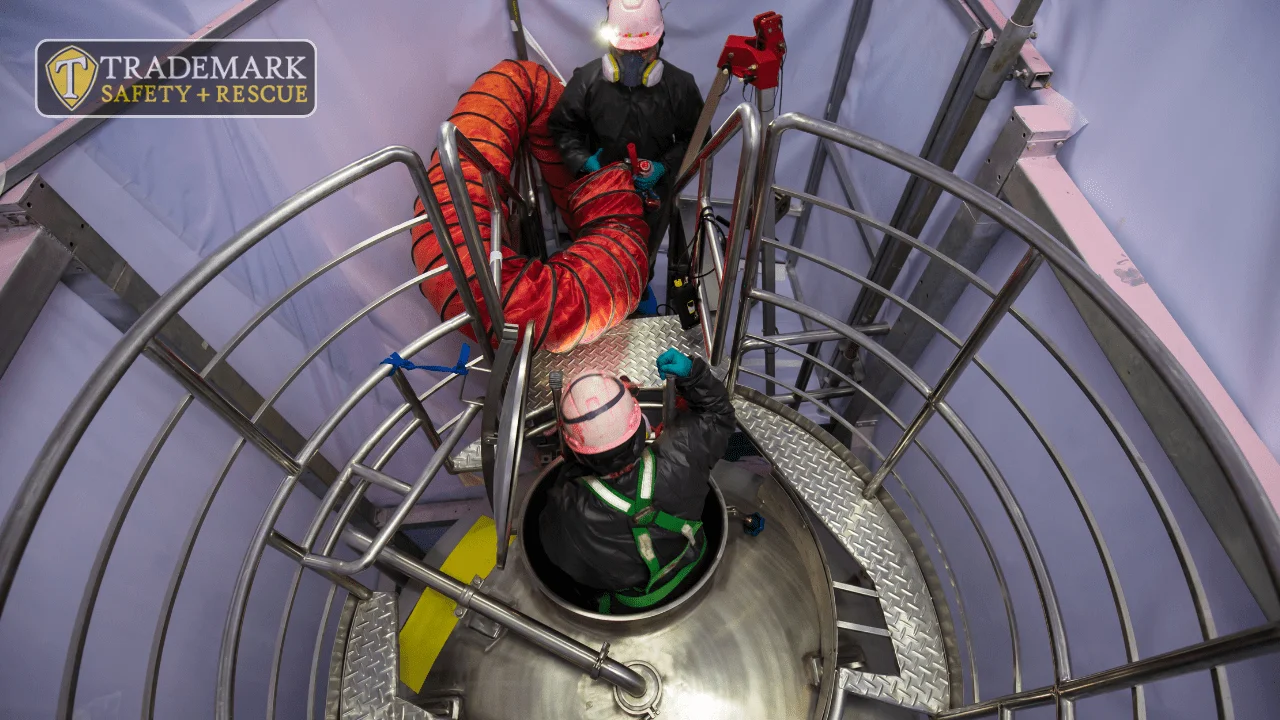
Smarter Technical Rescue – Working at Height and Confined Spaces
Technical rescue situations can become complex within seconds. A worker at height may be suspended after a fall, while someone inside a confined space could face restricted movement, poor visibility, or difficult access. In both cases, the rescue approach needs to account for the environment, available equipment, and the condition of the person involved. Smarter technical rescue – Working at height and confined space focuses on preparing for these challenges before an emergency occurs.
Learn MoreWhy Is Technical Rescue Different From Standard Emergency Response?
Not every workplace emergency can be handled with a basic first aid response. Some incidents require specialist knowledge, rescue equipment, communication, and a carefully planned recovery process.
Working at height and confined spaces are two situations where access itself can become part of the emergency.
For example:
- A fallen worker may remain suspended in a harness
- A person may become trapped in a restricted area
- Access routes may be narrow or difficult to navigate
- Rescue personnel may also be exposed to hazards
- Standard evacuation routes may not be practical
This is why technical rescue planning needs to consider both the casualty and the rescuers.
What Makes Technical Rescue Challenging?
Technical rescue situations present unique challenges that require careful planning and specialized knowledge. Different environments demand different approaches to ensure both the casualty and rescue personnel remain protected.
Working at Height Rescue
A fall from height does not necessarily mean the incident ends when the worker is secured by their fall protection system. A suspended worker may still need to be recovered safely and efficiently.
The rescue team needs to understand factors such as:
- Where the worker is located
- How the worker can be reached
- What access equipment is available
- Whether additional fall protection is required
- How the casualty can be lowered or raised
- What hazards exist around the work area
A rescue plan should also consider what happens after the person is brought to a safe location. Medical assessment may be required, and the area may need to remain controlled until the incident is fully managed.
Confined Space Rescue
Confined spaces can create several challenges at the same time. Entry and exit may be restricted, visibility can be limited, and the atmosphere may present additional risks.
A rescue plan should therefore address questions such as:
- Can the casualty be removed without another person entering?
- If entry is necessary, how will the rescuer remain protected?
- Is atmospheric monitoring required?
- What communication method will be used?
- How will rescue equipment be positioned?
- Can emergency services reach the location easily?
The answers should be established before work begins rather than during an emergency.
Can One Rescue Plan Work for Every Site?
No. Rescue planning should reflect the specific workplace, task, hazards, equipment, and personnel involved.
A plan developed for a construction site may not be suitable for an industrial facility or a confined-space operation. Even similar tasks can have different rescue requirements depending on the physical layout.
A practical assessment can look at:
The Work Environment
Identify access points, obstructions, edges, openings, and restricted areas.
Potential Emergencies
Consider realistic fall, entrapment, injury, or exposure scenarios.
Rescue Equipment
Confirm that suitable equipment is available and compatible with the planned procedure.
Rescue Personnel
Establish who has the required training and responsibilities.
Communication
Determine how workers, supervisors, rescuers, and emergency services will communicate.
Emergency Access
Make sure the rescue route is practical and understood.
What Should Employers Consider Before Work Begins?
Smarter technical rescue – Working at height and confined spaces should be considered before workers enter the area or begin work at height. A rescue strategy should form part of the overall safety planning process.
Key considerations include:
- Identifying foreseeable rescue scenarios
- Selecting appropriate rescue equipment
- Assigning responsibilities
- Reviewing access and egress arrangements
- Establishing communication procedures
- Providing suitable training
- Practising the rescue plan where appropriate
- Reviewing the plan when site conditions change
This approach helps move rescue planning from a reactive process to a planned safety activity.
Frequently Asked Questions
Smarter Technical Rescue: Key Takeaways
Technical rescue situations require preparation before they occur. Understanding the specific hazards of working at height and confined spaces allows employers to develop effective rescue strategies that protect both workers and rescue personnel.
Whether addressing working at height scenarios or confined-space emergencies, a comprehensive rescue plan forms an essential part of workplace safety. Trademark Safety + Rescue helps organizations strengthen their technical rescue approach through specialized training, rescue planning, and emergency response support designed around challenging work environments.
Ready to Strengthen Your Technical Rescue Planning?
Trademark Safety + Rescue provides comprehensive training, rescue planning support, and emergency response guidance to help organizations prepare effective technical rescue procedures for working at height and confined space operations.
Contact Us Today
Leave a Reply